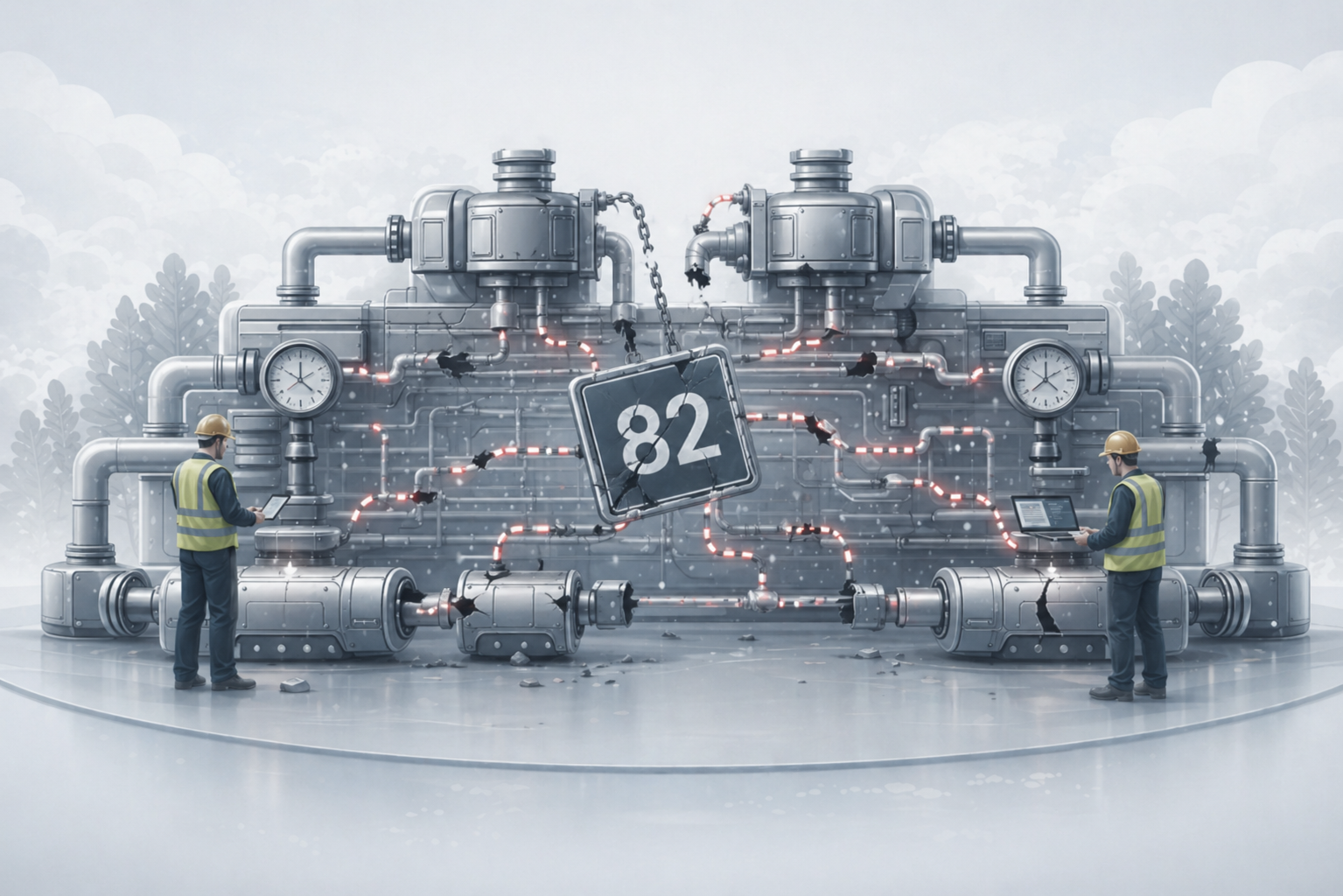
Operating Models That Don’t Produce Signal Will Fail
Most operating models were built to get work done—not to understand how well that work is performed.
That’s the gap.
When execution isn’t structured, consistent, and verifiable, it doesn’t produce signal. And without signal, there’s no way to measure performance, manage risk, or make informed decisions in real time.
This is why AI struggles in most environments—it doesn’t lack intelligence, it lacks signal.
When operations are governed, execution starts producing signal—and that changes everything.

AI Requires a Different Operating Model
AI doesn’t need more data. It needs a system that produces signal.
Most operations generate activity—work orders, vendor visits, completed tasks—but very little of it is structured, comparable, or trustworthy. That’s why AI struggles. It doesn’t fail because the technology is limited. It fails because the operating model underneath it isn’t built to support it.
When assets, processes, and execution are governed as a system, performance becomes measurable—continuously, not after the fact. Signal is produced by design, not reconstructed after the work is done.
That’s when operations become deterministic, auditable, and autonomous—and AI finally works.

Why AI Exposes the Failure of the Reactive, Break-Fix Model
The reactive, break-fix model appears effective but lacks the structure, consistency, and visibility needed to manage performance over time, producing fragmented data and no reliable link between maintenance and outcomes. As AI becomes central, these gaps are exposed—AI requires structured, repeatable signals that break-fix simply doesn’t provide.
Without a governed operating model, AI can’t improve your operations—it can only reveal their weaknesses.

Oversiit POV: Break-Fix Erodes Enterprise Value
Most businesses don’t fail because they lack effort.
They fail because their operations aren’t governed.
The break-fix model feels practical — until it starts rewriting your budgets, shortening asset life, and eroding enterprise value.
In Part 1 of our series, we explore why reactive operations aren’t just inefficient — they’re financially destructive.
And why the shift from reactive to auditable is one of the most important changes operators need to make.
The Case for Governance
Most organizations don’t lack data — they lack governance.
When maintenance, compliance, and capital planning operate in separate systems, leadership is forced to make infrastructure decisions based on incomplete information.
This post explains why governed operations are becoming the foundation for operational clarity and capital planning.